
Guide
The Stockton office cleaning checklist, room by room
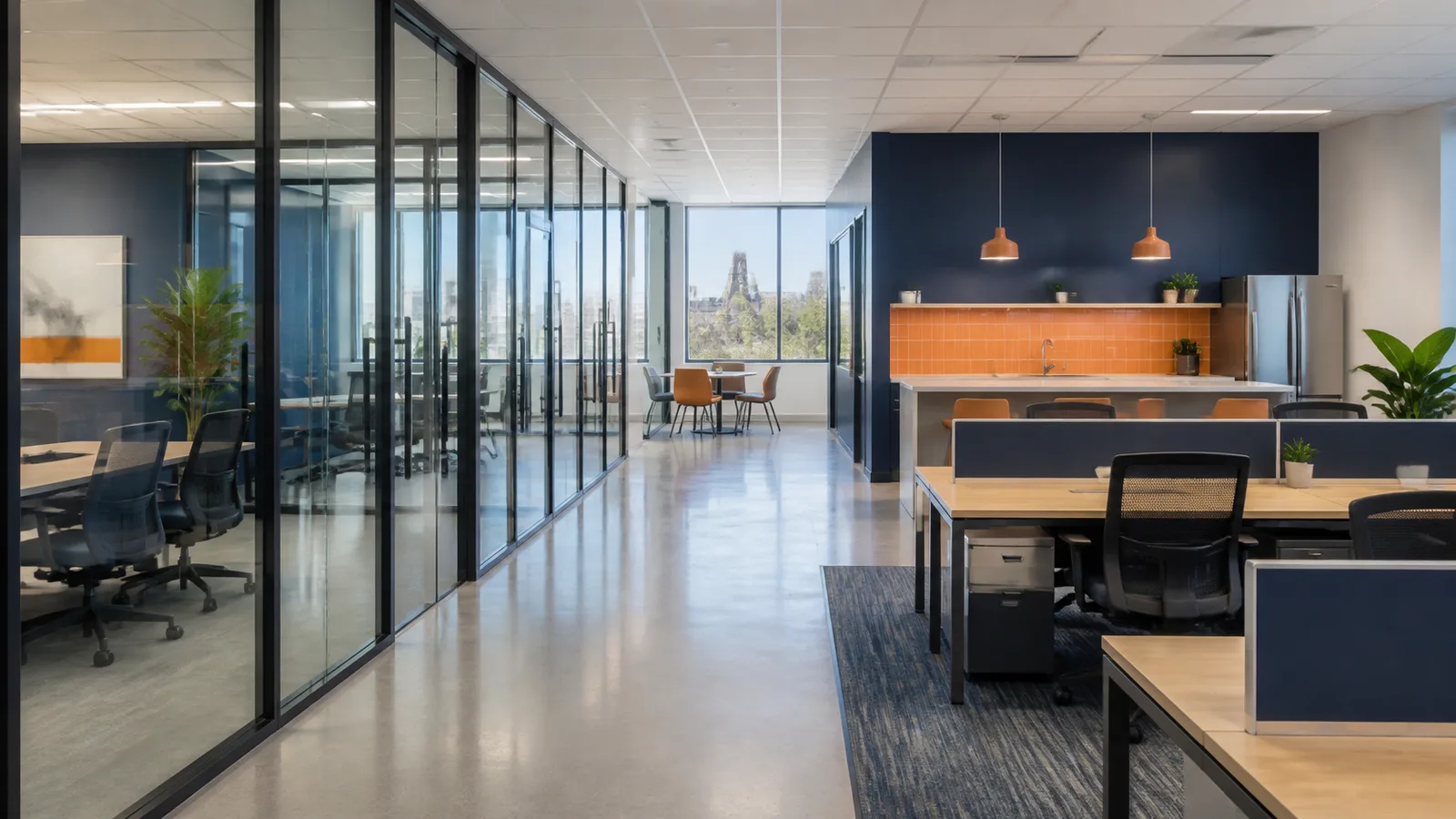
Office cleaning makes the most sense when you follow it the way a crew does, from the front door through the workstations to the kitchen. Here is that route for a Stockton office, one room at a time.
Printable checklist
Entry and reception
The front door is where visitors form their first impression, and it is where most of the soil comes in. A crew starts here with entry glass, door handles and the push plates people grab on the way through. The front counter is wiped clear, waiting chairs are straightened and the floor just inside the door is vacuumed or mopped to suit its surface.
An office on a busy street sees more grit at the door than a suite tucked inside a quiet building. Offices inside logistics sites see the most of all, since crews walk in straight from the warehouse floor. Entry floors at those offices get extra care on every visit.
Workstations and private offices
Desks are cleaned around whatever people leave on them. The crew dusts open surfaces, empties bins and recycling, and rolls chairs back to the desk. Paperwork, screens and personal belongings are left just where they are unless you set a different rule.
Private offices follow the same pattern. A restricted room, such as a records room or a locked executive office, is cleaned only on the terms you set, and the crew keeps to them on every visit.
Shared touch points get attention across the floor too: light switches, door handles and common equipment such as printers and copiers.
Meeting rooms, kitchens and breakrooms
Meeting rooms are reset for the morning. Tables are wiped, chairs squared up and bins emptied, so a conference room that hosted a working lunch looks the same as one that sat empty all day.
The kitchen or breakroom is usually the hardest room in the office. Counters, sinks, tables and appliance fronts are wiped, spills on the floor are cleaned up, and trash and recycling go out on every visit. Breakrooms in busy offices carry the most food soil, so they get the most time.
Small details finish the room. Microwave handles, coffee station counters and the tops of shared tables are the surfaces people touch with food on their hands, and they are wiped on each pass. A kitchen that looks clean at a glance but has a sticky coffee counter still reads as dirty to the next person who walks in.
Restrooms and floors
Restrooms get detailed attention on each visit: fixtures, mirrors, counters, partitions and floors. Paper and soap are restocked under the supply arrangement agreed when service starts.
Floors are cleaned along the whole route. Carpet is vacuumed and hard floors are mopped, with the busiest walkways getting the most care. Heavier work, such as burnishing a corridor or caring for carpet in high-traffic lanes, runs through floor care on its own calendar.
Hard floors in an office rarely match from room to room. Reception might be stone, the kitchen VCT and the workstations carpet. Each surface is cleaned with the method that suits it, and our guide on when floors need stripping or deep carpet cleaning explains the signs that a floor has outgrown routine care.
What runs every visit and what runs on a cycle
Every visit covers the rooms that change daily: reception, workstations, meeting rooms, the kitchen and restrooms. Trash goes out, surfaces are wiped and floors are cleaned.
Other work runs on a longer cycle. Floor finishes are burnished or recoated once traffic lanes begin to dull, walkway carpet gets deeper care when it shows wear, and resilient floors are stripped and refinished after the finish has worn through. Putting those tasks into the plan keeps the office from needing a big catch-up job.
Frequency follows headcount and visitors. A small Stockton team with few guests is well served by a few evenings each week, while an office with clients coming through daily needs office cleaning every working night.
What to tell the crew before the first visit
A smooth start comes from a few clear answers. The on-site walkthrough we do before every quote is the time to give them, walking the office together from the door to the kitchen. The last section of the printable checklist above, Settle before service starts, lets you write those answers down ahead of time.
If reception stays busy all day, porter rounds between evening visits keep the lobby and restrooms ready for guests. The day porter service page explains how those rounds work.
A few useful answers
Quick answers.
What gets cleaned on every office visit?
Reception, workstations, meeting rooms, the kitchen and restrooms, with trash removed and floors cleaned throughout.
Which office tasks run less often than every visit?
Burnishing, recoating, strip and wax and deeper carpet care. They are scheduled through floor care on a cycle of their own.
What happens to the papers left on our desks?
They stay put. Desks are cleaned around paperwork and personal items unless you set another rule.
Resources
Related guides
Services