
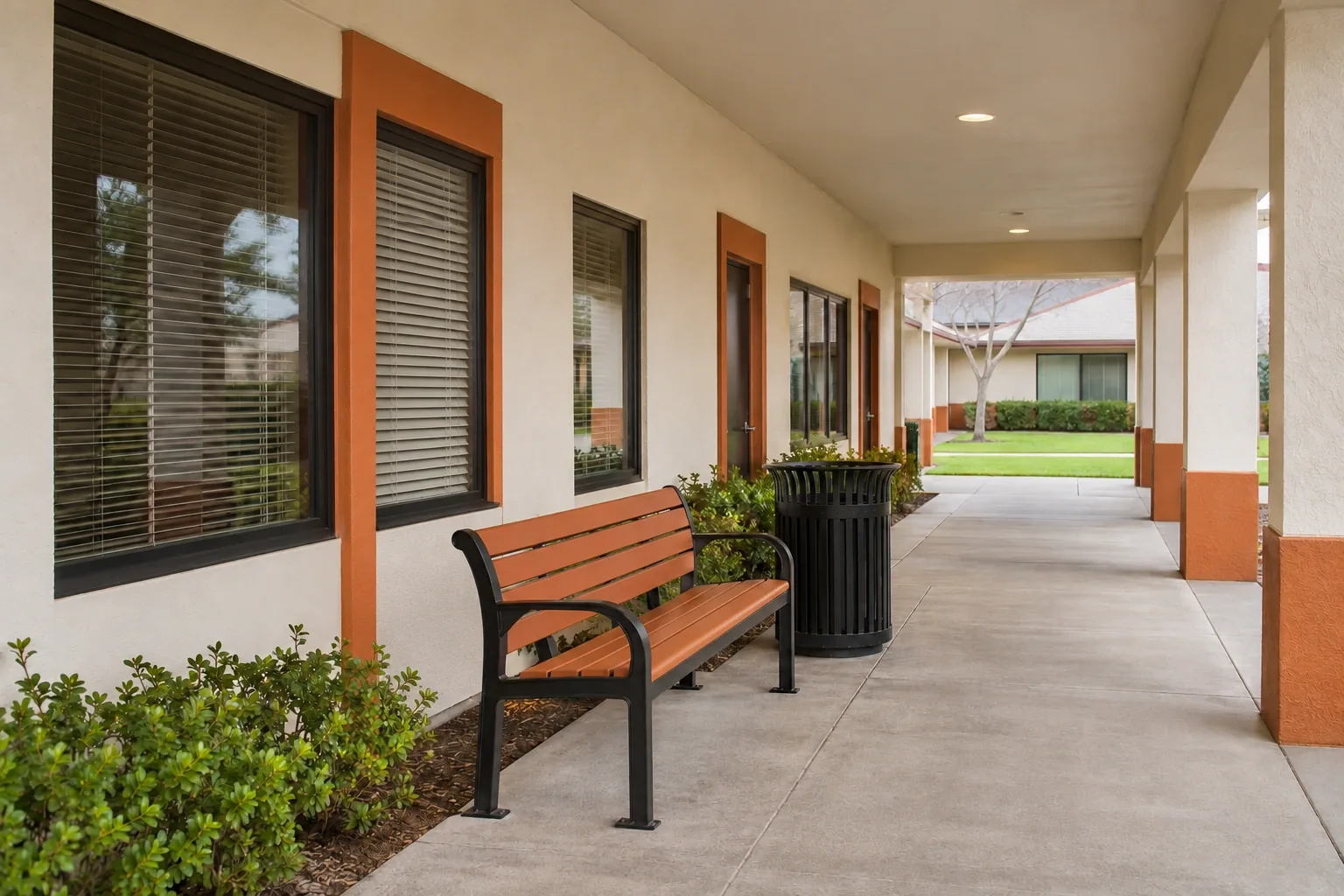
Day and night porter services in Stockton
Day porter service for Stockton properties: entrances, restrooms and shared spaces kept clean while people are using them.
Cleaning during open hours
A day porter keeps entrances, restrooms and busy rooms clean while your building is open, and night porters cover second shifts.
Porters handle spill response, spot cleaning, trash and recycling, and wipe high-touch surfaces.
Your porter keeps restrooms stocked through the day, from your supplies or ours.
Set the coverage window and frequency around your busiest hours.
Porters work a set loop, so the same rooms are checked at the same times each day.
Popular services
Porter coverage works alongside these services:
01 Commercial Cleaning ↗ · 02 Office Cleaning ↗ · 03 Floor Care ↗
Porters for busy Stockton buildings
Busy Stockton lobbies, restrooms and shared spaces get porter rounds timed to the hours they fill up.
What a porter round covers
A porter works the building while it is open. Rounds move through entrances, restrooms and other high-use areas, dealing with spills, spot cleaning, trash and recycling, and wiping the surfaces people touch most. Restroom towels, soap and liners are topped up along the way.
Porters pair well with evening commercial cleaning, and transit and terminal properties can add them to transportation facility cleaning for the busiest stretches of the day.
How a porter’s shift is laid out
A porter shift follows the building’s rhythm. The first loop checks entrances and restrooms before the morning rush. Late morning and the lunch hour are the busiest stretch, so the porter stays close to lobbies, breakrooms and the restrooms nearest them. Afternoon loops catch the trash, spills and smudges left behind by a full day of use.
Between loops, the porter handles whatever the day brings: a spill at the front door, a restroom that needs attention before a client arrives, a breakroom that needs resetting after a lunch meeting. Anything that calls for a repair or a decision goes straight to your property contact.
Where porters help most
Professional office lobbies use a porter to keep waiting areas and restrooms ready between visitors. Retail buildings with public restrooms need someone on the floor through the lunch rush and the afternoon. Terminals and transit properties need restrooms and seating kept up through every arrival, and distribution sites running a second shift can add a night porter for the crew rooms.
Whether a building needs a porter, the nightly crew or both is mostly a question of when it gets busy. Our guide to day porters versus nightly janitorial works through that choice, with the two costs side by side.
Porters and the evening crew
Porter rounds and the evening crew share one plan. Pair porter hours with office cleaning for a workplace, or with commercial cleaning for a storefront or mixed-use property, and the crew that arrives after close picks up restroom detail, floors and the rooms the porter does not reach.
Day porter vs night janitor
A day porter and a night janitor clean the same building for different reasons. The porter works while people are inside, keeping the busiest rooms presentable hour by hour: spills, trash, restroom checks, touch points and quick resets after meetings. The night janitor arrives once the building empties and does the work that needs room to move: full restroom cleaning, vacuuming and mopping every floor, dusting desks and emptying every bin.
Busy Stockton buildings often run both. The porter covers the daytime shift and notes where the day was hardest, and the evening crew starts there. A building that is quiet by day may need only the night crew, while a lobby or terminal that fills up by mid-morning gets the most from a porter.
Day porter rates for Stockton properties
Day porters in Stockton bill by the hour. As of 2026, most porter shifts here run $30 to $36 per porter-hour, and a short, simple route starts near $29. The figures are rounded from published market data for the area. Our Stockton cleaning prices guide sets porter rates beside nightly cleaning and floor work.
Hours times rate gives the monthly figure. A distribution campus wants a porter from 11 in the morning until 3 in the afternoon on weekdays, covering the lobby, two restroom cores and the drivers’ break room. Four hours a day over five weekdays adds up to 20 hours a week, near 87 hours a month. Billed at $36 an hour, the porter costs about $3,132 monthly. Stretch the shift to cover the afternoon break and the hours climb with it.
The route sets the rate. A porter who restocks supplies, answers spills and reports issues to the property contact carries more than one who only walks trash. Several buildings on one campus add walking time. Early starts, evening coverage and weekend shifts cost more per hour. A porter booked on short notice for a move or a busy week costs more too. Rates near $39 an hour fit long routes with heavy duties. We walk the route with you before any number goes on paper.
Questions about Day Porter
Can porter hours match our peak times?
Yes. Coverage is set around your busiest hours.
Do porters report issues they find?
Yes. Issues are reported to your property contact.
Where do restroom supplies come from?
From your stock or ours. You can supply the towels, soap and liners yourself, or have them provided as part of the service, and the choice is settled before the first round.
What is on a porter’s round?
Spills, spot cleaning, trash, recycling, restocking and high-touch surfaces.
Can porters work evenings as well as days?
Yes. An evening or night porter runs the same round through your second shift: spills, spot cleaning, trash and restocking.
Does a porter do the same job as our night janitor?
No. The porter is on site while the building is open, handling spills, trash, restocking and touch points, and the janitorial crew does the full clean after hours.
Is porter service available for any Stockton commercial property?
Yes. Offices, storefronts, terminals and logistics buildings across Stockton can add porter rounds.
How do I choose porter hours?
Start with your busiest stretch, often late morning through lunch, and set coverage across it. Sites with shifts add coverage at the changeover.
How are porter hours turned into a monthly price?
By the porter-hour. Shift length, the rooms on the route, extra duties such as restocking, and early, evening or weekend hours set the rate, and the walkthrough turns them into a monthly figure.
Resources